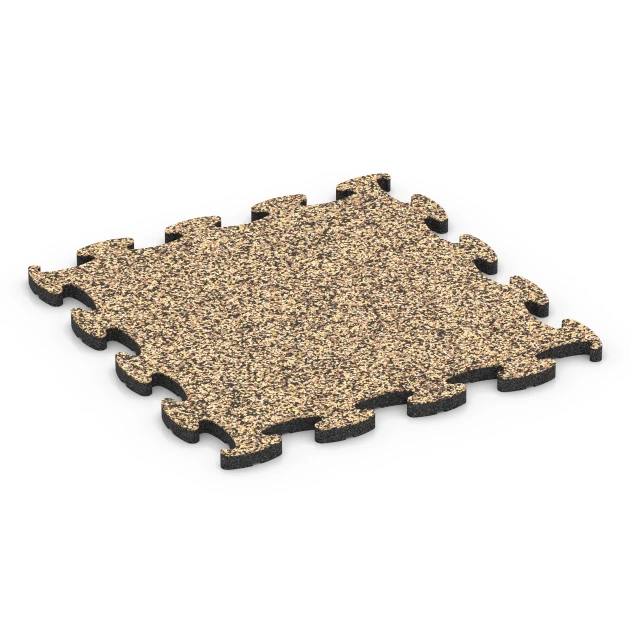
Fitness Max Floor System XT "Rattan"
- /
-
Ready to ship
in approx. 3-4 weeks – production yet to start - €90.95 / 5.03 Piece / m²
- (3.65 kg / Piece)
EAN: 4251469368675 | Item no.: 6867
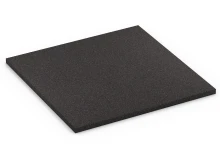
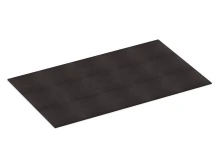
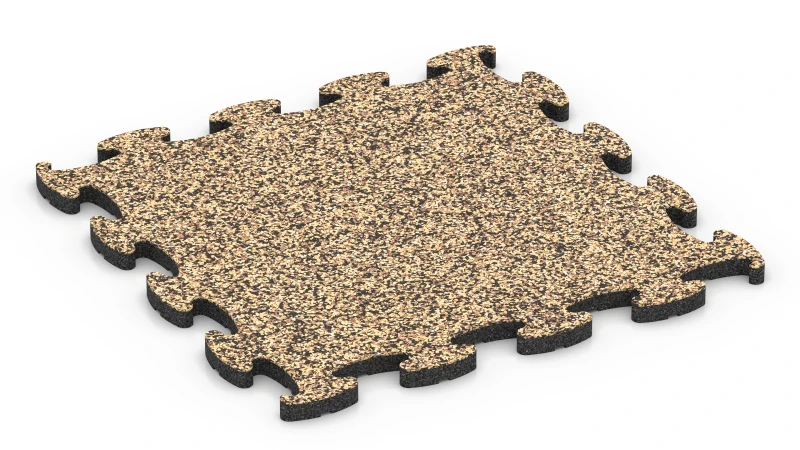
Fitness Max Floor System Type XT consists of precision-cut fitness tiles with a closed, densely compacted wearing layer made from EPDM rubber granules that are coloured throughout, so the colour remains as the surface wears. There is only a tight joint between adjacent tiles, so the finished floor looks as though it has been poured. The flooring is slip-resistant, abrasion-resistant and durable. Functional tiles can be added underneath to create a layered system.
What is the Fitness Max Floor System suitable for?
Racks, benches and cardio machines stand directly on the floor. People can set down kettlebells, run intervals or do box jumps on it. The flooring cushions impacts and reduces noise. It is also designed for functional training and HYROX. Different colours can distinguish training zones, such as the free-weight area and the cardio area.
What are the fitness tiles made from?
The upper wearing layer is made from newly produced EPDM rubber granules that are coloured throughout, so it retains its colour as the surface wears. The base layer is made from ELT granules, which are recycled rubber granules from end-of-life tyres. It carries the weight and cushions impacts. In normal use, racks and equipment do not leave permanent indentations. The tiles also protect screed, floor tiles or parquet underneath. Freshly unpacked tiles sometimes smell of rubber. With good ventilation, the smell soon fades.
How are the fitness tiles laid?
The tiles are loose laid. No drilling, adhesive or screws are needed. The substrate, such as screed, concrete, floor tiles or parquet, must remain stable, capable of bearing the load and largely level. The tiles can also be laid over underfloor heating. Their optimised jigsaw interlock connects them and prevents the edges from lifting. Different formats cannot interlock, so one format is laid across each area. At the perimeter, the tiles are cut with a jigsaw or circular saw. On request, WARCO can use a DXF file from the laying planner to supply the tiles cut to size and ready to lay at an extra charge. The flooring is intended for indoor use.
How hygienic and easy to clean is the flooring?
Sweat and cleaning products do not penetrate the tiles. The tiles themselves do not let water through. During mopping, virtually no water passes through the floor, but spilled water can slowly seep through the joints. For everyday cleaning, use a vacuum cleaner, broom or mop. For damp mopping, use warm water and a neutral cleaner. The tiles can also be wiped with alcohol-based disinfectants as part of a hygiene routine.
What makes this a flooring system?
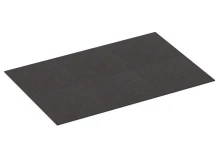
Type XX functional tiles can be placed beneath the fitness tiles. Several layers can be used. They are available in two thicknesses and three densities. A lower density provides greater shock absorption. A higher density carries more weight and suits areas where weights are dropped. Each training zone can therefore have the floor build-up it needs. The thicker version of the fitness tiles is also recommended for heavy weights.


Discount
Product Highlights
Characteristics
Product Details – Material and Structure


Comparative values
Where rubber tiles are laid in several layers, the load-bearing capacity, shock absorption and overall thickness of the floor can be tailored to the intended use. The XT surface tile forms the top, visible layer and determines abrasion resistance. One or more XX functional tiles sit beneath it. Both XT surface tiles and XX functional tiles are made from PU-bound rubber granules and are available in a range of thicknesses and densities.
The choice and combination of the two tile types sets the overall thickness, load-bearing capacity and shock absorption of the system, allowing it to be tailored to the application. Systems of the same overall thickness can offer different levels of shock absorption. In playgrounds, a system designed for shock absorption can offer a higher critical fall height.
In weight-training areas, a shock-absorbing system can dissipate some of the impact energy. Indoors, it can improve impact sound insulation and reduce the transmission of structure-borne sound. It can also improve vibration damping beneath machinery and plant, or in vibration-sensitive areas.
Different rubber tiles can be combined in a layered system. Type XX tiles are available in three cushioning grades; any number can be used in any order beneath the surface tile. Each of these layers can have its own cushioning grade, density and thickness. The visible surface is formed by a type XT surface tile or another surface tile, whose density and elasticity need not match those of the tiles beneath it.
The order of the layers depends on how the area will be used and the performance required of the layered system. The layers are selected and arranged to balance shock absorption, load-bearing capacity and how point loads are spread. Two systems of the same overall height can therefore differ in load-bearing capacity, elasticity and damping.
Where rubber tiles are laid in more than one layer, the joints in each layer should be staggered rather than positioned directly above one another. In a multi-layer build-up, each layer is offset from the one below so that the tiles in the upper layer bridge the joints in the layer beneath.
Staggering the joints in this way avoids joint lines running straight through the build-up and helps to keep the finished surface even. Outdoors, it also leaves no continuous path for vegetation to grow up from the ground beneath.
Different tile sizes can be combined in a floor with more than one layer. Surface tiles and functional tiles are designed to be used together in this way, rather than stacked with their joints aligned.
Allowing for joints, each surface tile occupies 44.6 × 44.6 cm or 97.1 × 97.1 cm. Functional tiles, by contrast, come in 52 × 52 cm or 104 × 104 cm sizes and are laid with butt joints, without interlocking edges. Their nominal dimensions are therefore also the dimensions used to calculate coverage.
The layers are laid to different grids so that their joints are offset as intended. Joints in the upper and lower layers never align to form a continuous joint through the floor.
The number of tiles must therefore be calculated separately for each layer. The floor area to be covered is the same for both, but the number of tiles required depends on the coverage dimensions of each tile type.
Impact-absorbing flooring made from PU-bound rubber granules reduces impact sound and the structure-borne sound it generates. The elastic floor covering absorbs impacts and reduces their transfer to the substrate.
Impact sound occurs when walking, jumping, moving furniture or setting down weights cause a floor or storey slab to vibrate. These vibrations travel through solid building components as structure-borne sound and can become audible as airborne sound in other rooms.
Structure-borne sound can also be caused by machinery and by installations fixed to the building. It may have causes and transmission paths other than impact sound, so it cannot be reduced by a floor covering alone.
Under load, a floor covering made from rubber granules deforms elastically. This deformation transfers the load to the substrate less abruptly, reduces the peak force and, through the covering’s internal damping, further weakens the remaining vibrations.
Sound-insulation tiles reduce excitation of the substrate from footsteps, jumps and impacting objects. Where higher requirements apply, multi-layer flooring systems with functional layers of differing elasticity can further reduce impact transmission. Their effectiveness depends on the properties of each layer, the load applied, and the existing floor or slab structure.