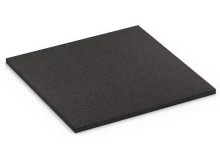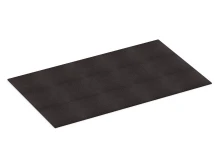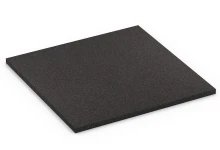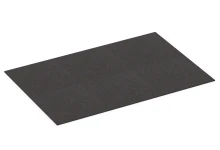
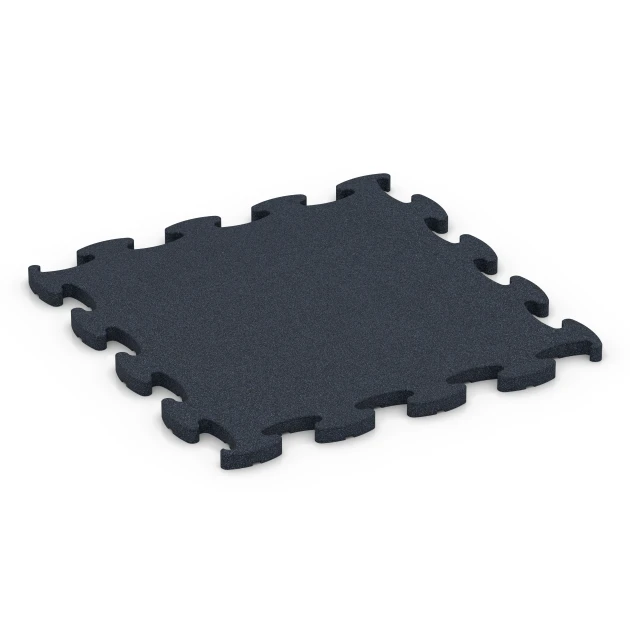
Fitness Premium Performance Flooring XT "Anthracite"
- /
-
Ready to ship
in approx. 2-3 weeks - €63.81 / 4.76 Piece / m²
- (3.94 kg / Piece)
EAN: 4251469369665 | Item no.: 6966
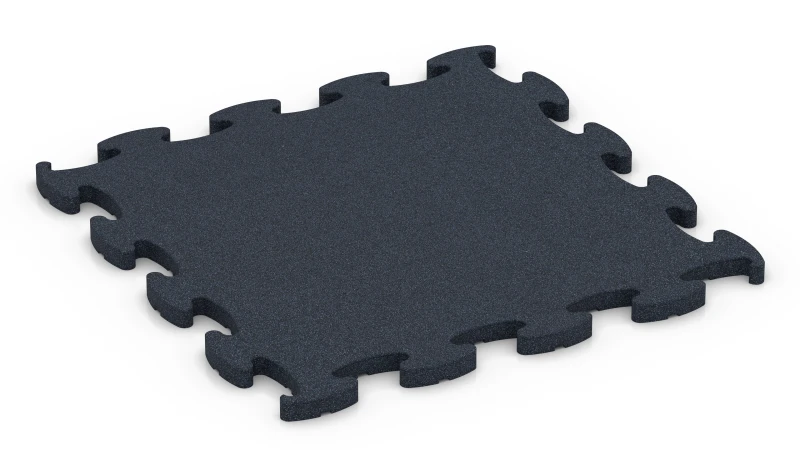
Fitness Premium Performance Flooring is an elastic indoor training surface for commercial gyms, strength areas, club fitness rooms and functional training zones. The dense ELT rubber structure provides stable footing during free-weight exercises, sled work, circuit sessions and repeated impact training. The surface remains comfortable underfoot while reducing vibration and training noise inside the room.
Manufacture and dimensional accuracy
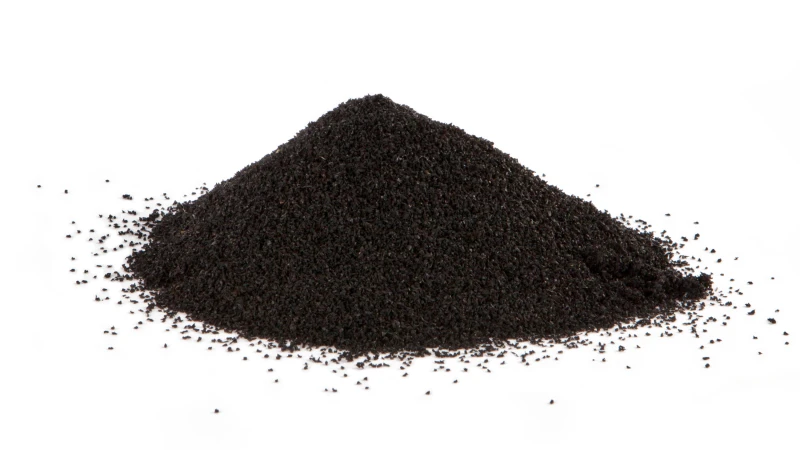
The tiles are manufactured from finely graded ELT rubber granules bonded with PU binder under controlled pressure. Precision-calibrated production ensures consistent thickness and reliable dimensional accuracy across the installation area. The compact structure reduces surface abrasion and creates an even training surface suitable for strength and conditioning environments with frequent equipment movement.
Surface and wear resistance
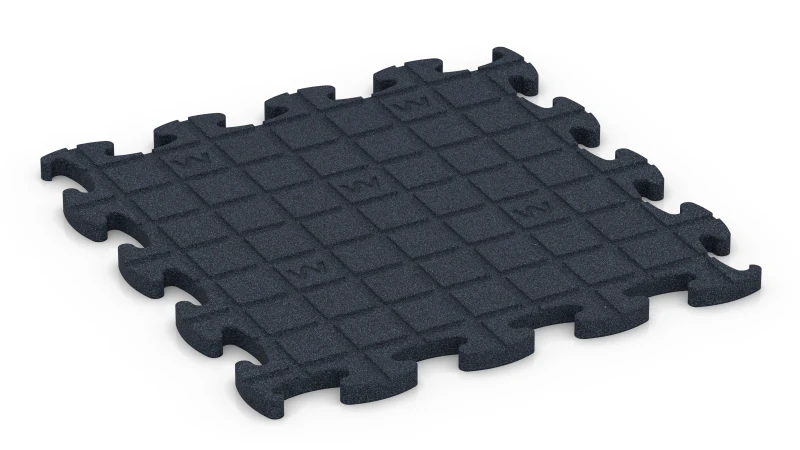
The finely textured surface provides dependable grip during fast directional movement, lifting exercises and repeated foot contact. The compact upper layer withstands abrasion from training shoes, movable benches and gym equipment while remaining comfortable for floor exercises and functional training sessions. The closed surface structure absorbs only minimal moisture and simplifies routine cleaning after intensive daily use.
Connection and installation
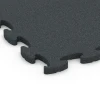
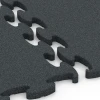
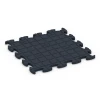
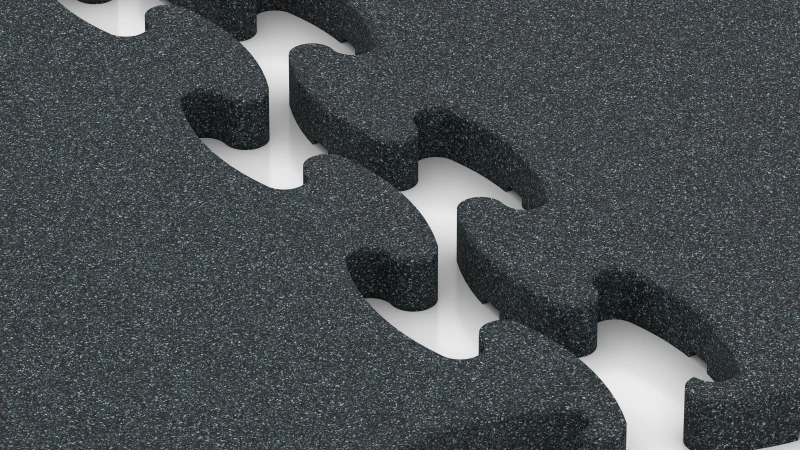
Each tile incorporates a calibrated jigsaw interlock that keeps adjoining elements securely connected without adhesive bonding. The interlock creates a narrow hairline joint and produces a continuous floor surface with minimal visible separation between the tiles. The flooring can be laid as a floating installation on a level, load-bearing subfloor. Individual sections can be lifted and replaced if required, which simplifies maintenance work and later alterations within the training area.
System accessories
For deeper floor constructions, the flooring can be combined with resilient base pads manufactured from PU-bound rubber granules. In sandwich floor constructions, the lower layer increases resilience and improves vibration reduction beneath heavy training equipment and free-weight stations. Different combinations of upper layer and base pads allow the floor response to be adjusted for specific indoor training zones while maintaining a consistent surface finish throughout the installation area.


Discount
Product Highlights
Characteristics
Product Details – Material and Structure
Comparative values
Impact-absorbing flooring made from PU-bound rubber granules reduces impact sound and the structure-borne sound it generates. The elastic floor covering absorbs impacts and reduces their transfer to the substrate.
Impact sound occurs when walking, jumping, moving furniture or setting down weights cause a floor or storey slab to vibrate. These vibrations travel through solid building components as structure-borne sound and can become audible as airborne sound in other rooms.
Structure-borne sound can also be caused by machinery and by installations fixed to the building. It may have causes and transmission paths other than impact sound, so it cannot be reduced by a floor covering alone.
Under load, a floor covering made from rubber granules deforms elastically. This deformation transfers the load to the substrate less abruptly, reduces the peak force and, through the covering’s internal damping, further weakens the remaining vibrations.
Sound-insulation tiles reduce excitation of the substrate from footsteps, jumps and impacting objects. Where higher requirements apply, multi-layer flooring systems with functional layers of differing elasticity can further reduce impact transmission. Their effectiveness depends on the properties of each layer, the load applied, and the existing floor or slab structure.