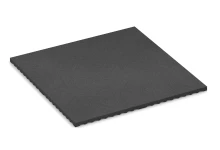
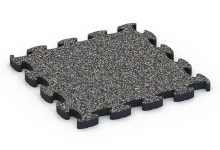
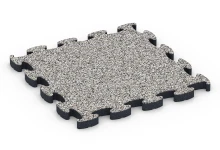
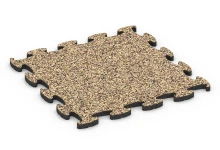
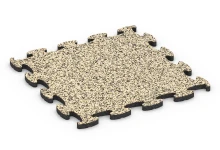
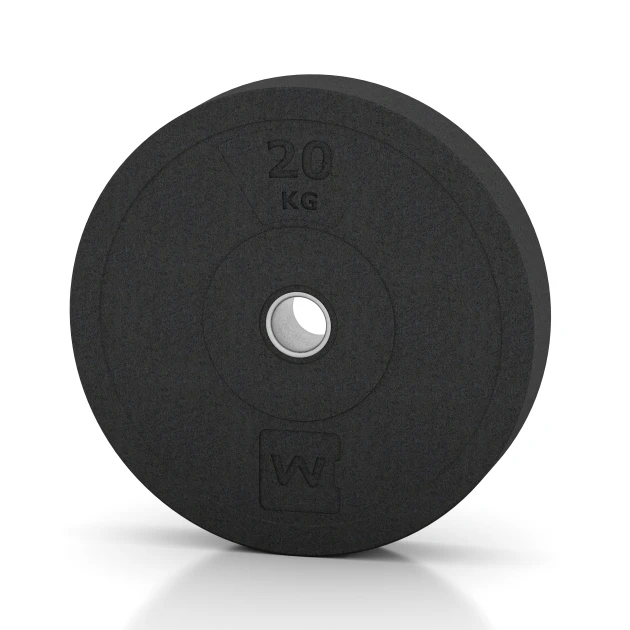
Bumper Plate Slim BP "Anthracite"
- /
-
Ready to ship
in approx. 3-4 weeks – production yet to start - (20.00 kg / Piece)
EAN: 4251469360891 | Item no.: 6089
Bumper Plate Slim combines fine rubber granules bonded with polyurethane with a metal core at its centre. The core packs a lot of weight into a small space. This makes the plate narrower than a Bumper Plate without a metal core. More weight can therefore fit on the barbell. When the barbell is dropped, the rubber absorbs most of the impact energy. All weight options have the same diameter.
What training is Bumper Plate Slim suitable for?
Bumper Plate Slim is designed for training with high barbell loads. This includes snatches, cleans and jerks in weightlifting, heavy deadlifts and squats, and cleans in CrossFit. The plate fits Olympic barbells with 50 mm sleeves. It can be used in a gym, a CrossFit box or a home gym. Its UV-stabilised granules also make it suitable for outdoor training.
What does the slim profile offer?
Bumper Plate Slim takes up noticeably less space on the barbell sleeve than a rubber plate of the same weight without a metal core. The barbell can therefore be loaded with more plates and more weight.
How does Bumper Plate Slim absorb impact?
Bumper Plate Slim cushions the impact with its elastic rubber. The rubber yields slightly when it hits the floor and slows the barbell down. Part of the energy is converted into heat. The rest produces a controlled rebound. An iron plate, in contrast, transfers the impact to the floor and the building structure with very little absorption. Bumper Plate Slim significantly reduces the peak impact force and makes the drop noticeably quieter.
Why are all weights the same diameter?
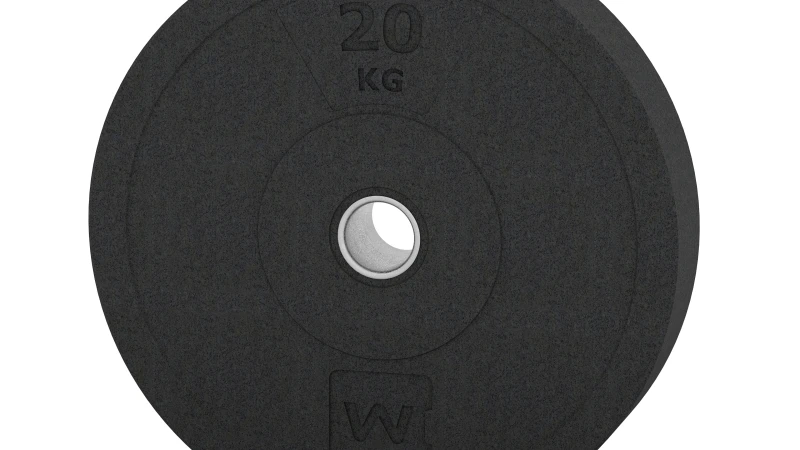
Bumper Plate Slim has the same outer diameter in every weight option. Only the width increases with the weight. The barbell therefore always rests at the same starting height. When the barbell is dropped, it lands evenly. The impact is spread across all the plates loaded on the barbell. This protects the plates, the barbell and the floor beneath them.
What is Bumper Plate Slim made from, and what flooring should be used underneath?
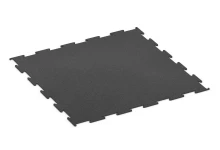
Bumper Plate Slim is made from fine recycled tyre rubber granules (ELT). The granules come from processed end-of-life tyres. They are bonded with polyurethane and pressed around the metal core under high pressure. The finely textured, closed surface is abrasion-resistant. The material complies with EU limits for harmful substances. An initial rubber smell fades after a short time. Wherever heavy barbells are dropped regularly, a suitable floor is needed beneath them, such as a training floor with Base Layer Class 1 underneath.


Discount
Product Highlights
Characteristics
Product Details – Material and Structure

Comparative values
Equipment for a home gym includes a slip-resistant fitness surface, suitable training equipment, storage and sufficient movement space for exercises.
A slip-resistant fitness surface is best planned in from the outset. A fitness surface made from PU-bound rubber granules reduces noise and vibration and protects the substrate. Thinner tiles are often sufficient for cardiovascular equipment, while thicker slabs are selected for floor exercises, free-weight areas and heavy equipment.
To get started, include equipment for pushing, pulling, leg and core exercises. Basic equipment includes dumbbells or kettlebells, resistance bands and a pull-up bar. An adjustable weight bench and an exercise mat complete the set-up.
For squats, bench presses and deadlifts, add a barbell, weight plates and a rack with safety supports. The rack and pull-up bar should only be fixed to load-bearing structures. Cardiovascular equipment can supplement endurance training, but it is not essential.
Stable storage and sufficient movement space remain important.
A home gym needs a specialist gym floor covering designed for point loads and dynamic loads from training equipment, free weights, jumps and other movement-intensive exercises.
For these loads, a gym floor covering made from PU-bound rubber granules is slip-resistant, protects the substrate, absorbs part of the impact energy and reduces impacts and vibrations.
For effective basic cushioning, the gym floor covering should be at least 10 mm thick. The greater the equipment weight, impact load or potential drop height of weights, the higher-performing the gym floor covering must be. Damping cannot be determined from covering thickness alone: the relevant factors are the performance values of the specific gym floor covering, such as force reduction and impact sound reduction. Density and granule fraction are particularly significant for these performance values.
Where weights are dropped, the gym floor covering must be matched to their weight and drop height. Construction protection mats and comparable makeshift measures are not designed for use as gym floor coverings.
The cost of setting up a home gym, also known as a home fitness room, ranges from around €500 to €15,000 (about £425 to £13,000), depending on the fitness equipment, room size and fit-out.
Fitness equipment is usually the main cost driver, while room size and the extent of the fit-out also affect the budget.
A basic set-up with dumbbells, a weight bench and a pull-up bar costs considerably less than a training area with a rack, cable machine or cardio equipment. Delivery and installation costs often need to be added.
Second-hand fitness equipment can reduce initial purchase costs, provided that its condition, operation and transport are checked before purchase.
The flooring must also be included in the calculation. Slip-resistant fitness flooring made from PU-bound rubber granules dampens noise and vibrations and protects the substrate.
Flooring costs depend on the size of the training area, the thickness of the tiles and the preparation of the substrate. With suitable tile systems, the area can be extended later.