Equestrian Rubber Pavers VG "Brick red"
- /
-
Ready to ship
from stock in 1-3 days - €72.00 / 36 Piece / m²
- (1.15 kg / Piece)
EAN: 4251469344600 | Item no.: 4460
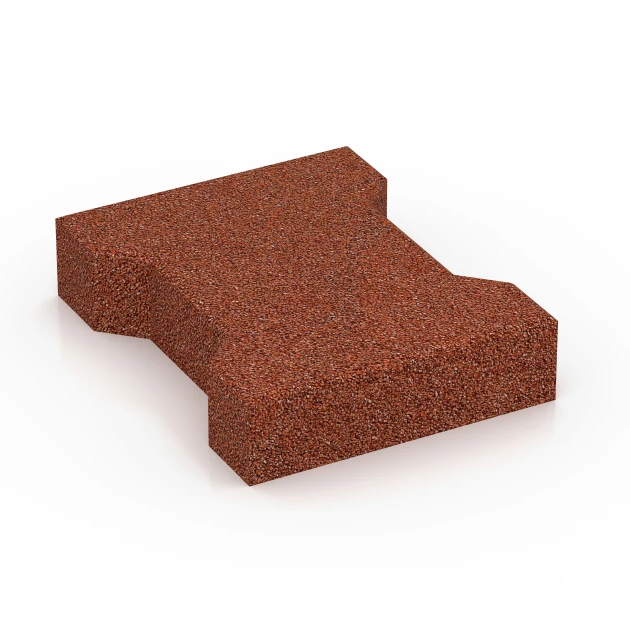
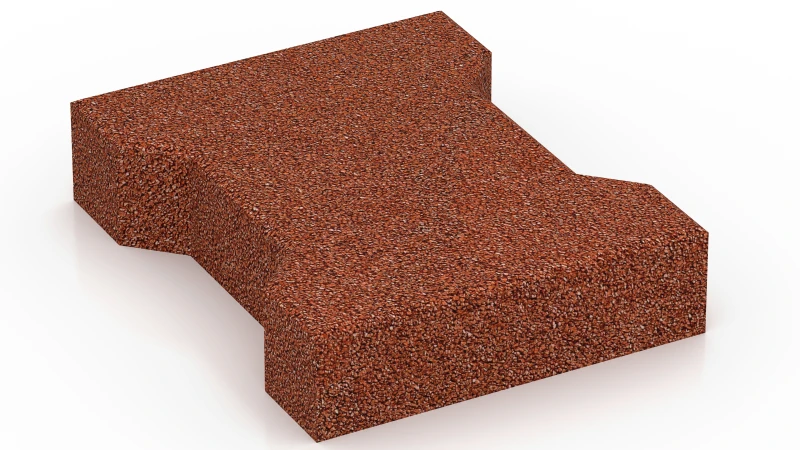
This rubber paver for horses has the same dog bone shape as traditional interlocking concrete pavers and is laid in the same way. It is made from rubber granules bonded with polyurethane. It is resilient under hoof, quiet and slip-resistant. When properly laid, the paving can carry cars, agricultural machinery and medium-duty lorries. It is not designed for regular use by heavy goods vehicles. The pavers lock together lengthways and crossways. They spread loads across neighbouring pavers.
Why use rubber pavers for horses?
On the way from the stable to the indoor school, in the stable aisle or around the yard, horses often walk on concrete, asphalt or stone paving. At every step, the hoof strikes a hard surface with no cushioning. Wet concrete can quickly become slippery for shod horses. A startled horse that jumps sideways can then easily lose its footing. Rubber pavers cushion each step and are slip-resistant for shod and barefoot horses alike. Hoofbeats sound muted and scarcely echo, even in a stable aisle. Less confident horses often walk more calmly on this type of surface. The interlock created by the dog bone shape and a firm edge restraint keep the pavers in place when horses move off or turn.
What are the benefits of rubber pavers in a horse walker?
In a horse walker, horses follow the same circuit day after day. A loose-fill surface of sand or wood chips soon develops a deep track. It becomes dusty in summer and muddy after rain. It also needs regular levelling, watering, loosening and topping up. Rubber pavers stay level, and the paving itself does not produce dust. After a rain shower, the track is ready to use again straight away. The paving is also suitable for paddocks, wash bays, yards and paths to the riding arena and pasture. It can be used wherever a low-maintenance, safe surface that is resilient under hoof is needed.
What are rubber pavers made from?
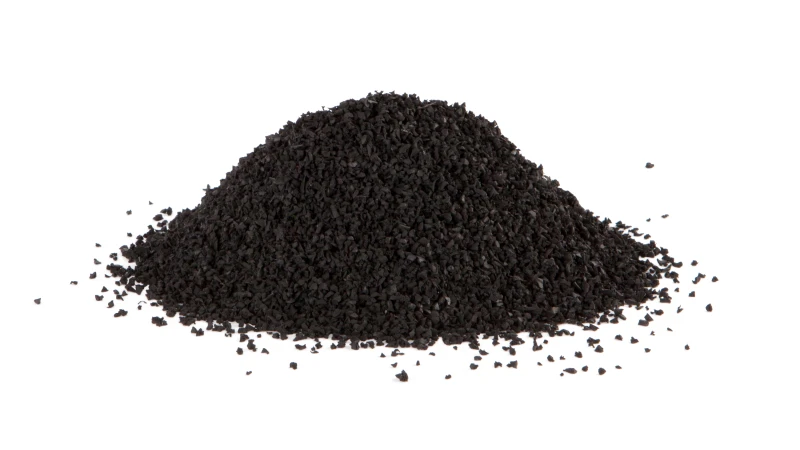
The pavers are made from recycled tyre rubber granules (ELT). A polyurethane binder holds the granules together. The material is pressed under high pressure to form a compact rubber paver. It is highly abrasion-resistant, frost-resistant and long-lasting, and it does not chip. New rubber pavers may smell of rubber at first, but the smell soon fades.
How are rubber pavers laid?
The pavers are laid in the same way as concrete block paving on a compacted, load-bearing and water-permeable sub-base. A laying course of grit is spread on top and levelled. The pavers are not glued. The area needs a firm edge restraint all around, such as low kerbs. Otherwise, the interlocked paving can spread apart. Pavers at the edges can easily be cut to fit with a circular saw. Junctions with concrete, gate thresholds and drains should be flush so that no hoof or horseshoe catches on an edge.
How does water drain away and how is the paving cleaned?
The rubber paver itself allows very little water to pass through. Rainwater, wash water and urine run off down the gradient or drain through the joints into the sub-base. Wash bays and stable aisles therefore need a gradient towards the drain. Horse droppings and leaves can be swept away. For a thorough clean, use a mechanical sweeper or pressure washer.


Discount
Product Highlights
Characteristics
Product Details – Material and Structure


Comparative values
Walkway slabs made from PU-bound rubber granules reduce footfall noise outdoors by preventing hard impact sounds from arising and by damping remaining vibrations.
On rigid surfaces, hard heels create short, forceful impacts that are heard as the familiar clacking sound. Wheeled suitcases, skateboards and transport trolleys can also produce rattling noise when small, hard wheels sink into joints, strike edges, or briefly lift over changes in level before hitting the surface again. Wider joints and greater differences in level make these impacts more pronounced.
Elastic walkway slabs and rubber block paving yield slightly under heels and wheels. With hard heels, this cushions the impact so that the typical clacking sound does not arise. Calibrated walkway slabs without chamfered edges create an almost joint-free walking surface, allowing small wheels to run quietly across the elastic rubber surface instead of producing the rattling noise associated with rigid surfacing.
On this elastic rubber surface, the internal damping of walkway slabs made from rubber granules further weakens remaining vibrations and reduces their transmission as structure-borne sound into the substrate. The slabs therefore act as walkable sound-insulating slabs for paths, passageways and courtyards. In hotel and residential developments, they are an effective means of significantly reducing noise levels.