
Rubber Dog Floor Mat RZ "Anthracite"
- /
-
Ready to ship
in approx. 7-14 days – production already under way - €47.71 / 0.95 Piece / m²
- (19.80 kg / Piece)
EAN: 4251469370852 | Item no.: 7085
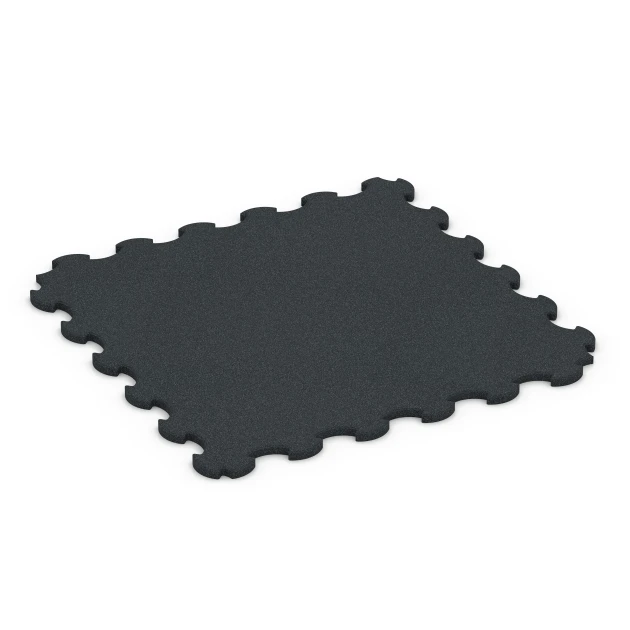
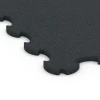
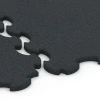
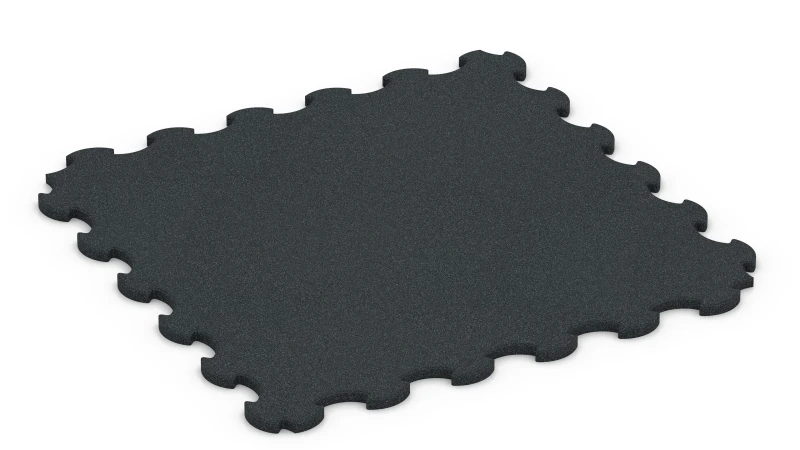
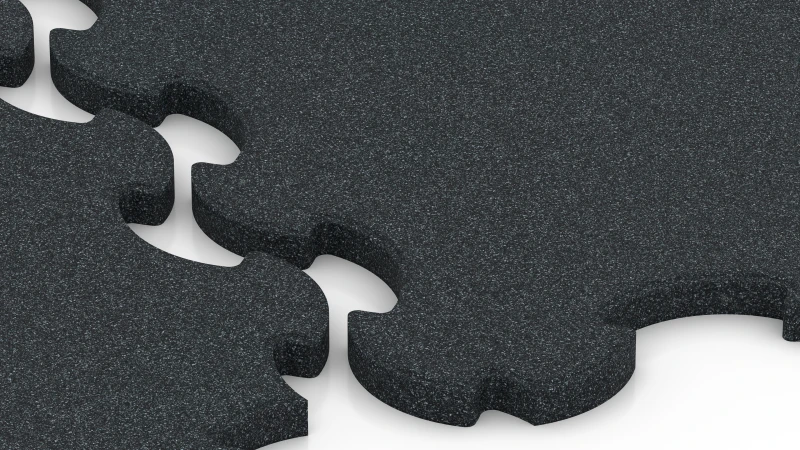
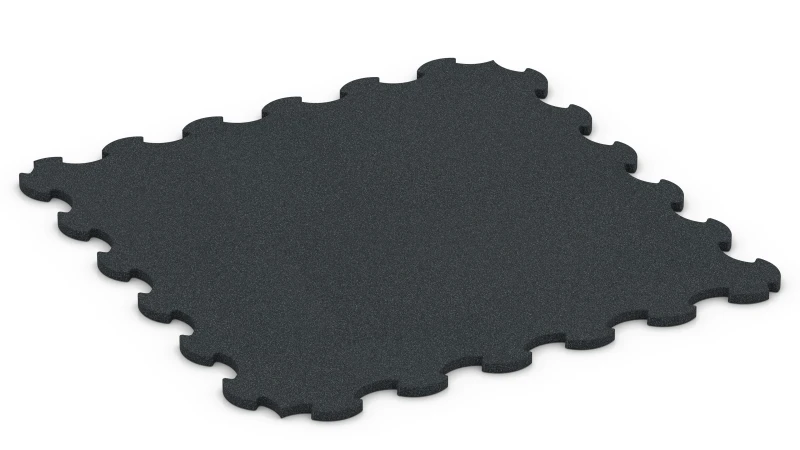
The Rubber Dog Floor Mat type RZ consists of large rubber mats that fit firmly together with a rounded jigsaw interlock. Its finely textured, closed surface absorbs very little liquid and is easy to clean. Indoors, it forms a grippy, abrasion-resistant protective floor covering that insulates against cold from below.
What is the mat like for dogs?
The Rubber Dog Floor Mat is useful on tiles or smooth screed, where dogs can slip when they get up, start running or stop. Puppies and older dogs are particularly affected. The grippy surface gives paws and claws traction. When a dog lies down, the mat insulates it from the cold floor. It also makes the clicking of claws noticeably quieter than on tiles.
Where can the mat be used?
The Rubber Dog Floor Mat is suitable for indoor floors in dog rooms, puppy pens, dog crates and indoor kennels. It can also be used in indoor pens at animal shelters and boarding kennels, as well as in treatment rooms at veterinary practices. The mat protects the existing floor from scratches caused by claws, water spilt from a bowl and accidents involving puppies that are not yet house-trained.
What is the mat made from?
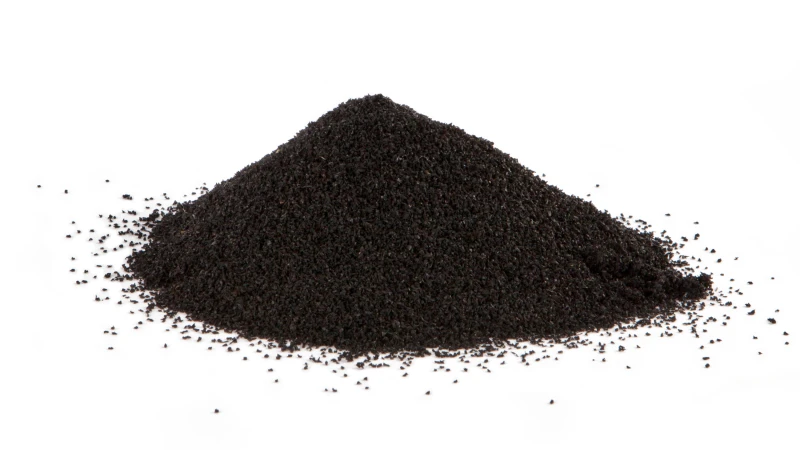
The Rubber Dog Floor Mat is made from ELT granules. These are rubber granules made from recycled end-of-life tyres and bonded with polyurethane. The granules are fine and nearly the same size. This creates an even, closed surface. The densely compacted material is very abrasion-resistant and stands up to claws. Dog crates and furniture also leave hardly any lasting indentations. New mats may smell of rubber at first. With good ventilation, the smell fades over time.
How is the mat laid?
Each Rubber Dog Floor Mat covers just over one square metre, so an area can be laid quickly. The mats are pressed into one another from above. The rounded jigsaw interlock holds them together without adhesive. Edging is not normally needed. The subfloor must be firm and largely level, such as tiles, laminate, vinyl or concrete. Where the laid area meets a wall, cut the mat to size, preferably with a circular saw. The mats can be lifted and relaid elsewhere after a move or refurbishment.
How is the floor kept clean?
Water and urine remain on the surface of the Rubber Dog Floor Mat, and very little of either liquid soaks in. Wipe them up promptly with a cloth or mop so that nothing runs through the joints beneath the mats. For daily cleaning, use a broom, vacuum cleaner or damp mop. The material is resistant to disinfectants, so the floor can be disinfected when required. For deep cleaning, lift the mats and rinse them with a pressure washer. Once dry, return the mats to the cleaned subfloor.


Discount
Product Highlights
Characteristics
Product Details – Material and Structure
Comparative values
Rubber mats made from PU-bound rubber granules can have a characteristic rubber smell, particularly when new. Whether and how strongly it is noticed depends on the material composition and on individual sensitivity to odours.
With WARCO rubber coverings, the inherent smell decreases over time. On well-ventilated outdoor areas such as balconies and terraces, it dissipates quickly. Heat may temporarily make the smell more noticeable.
The smell can remain noticeable for longer in indoor areas, conservatories and other poorly ventilated spaces where ventilation is limited. To reduce the initial inherent smell, rubber tiles may be stored for several days before installation in a dry, well-ventilated place. During storage, air should reach as many tile surfaces as possible.
After installation, regular brief periods of thorough ventilation or cross-ventilation support air exchange. With correct use, no adverse health effects from WARCO rubber coverings are known.
Rubber tiles and rubber mats from WARCO are not harmful to health when used as intended. They are made from rubber granules bound with PU; the solvent-free PU binder cures fully during manufacture.
The rubber granules are predominantly recycled from end-of-life tyres (ELTs). The PAH content of ELT rubber granules may vary according to origin and batch; PAH means polycyclic aromatic hydrocarbons. Black ELT rubber granules contain carbon black, a fine industrial soot that gives the rubber its black colour. Surface abrasion may occur during use of rubber mats.
In two-layer versions, the wearing layer is made from newly manufactured EPDM, which is coloured throughout and free from harmful substances. The possible PAH variations associated with ELT rubber granules do not occur with EPDM. Versions with an EPDM wearing layer are particularly suitable for prolonged or intensive skin contact and for areas intended for babies. The relevant product description states whether a product has a two-layer construction.
In normal use, furniture leaves no visible pressure marks or impressions on rubber tiles, provided the product description specifies that the covering is suitable for furniture and equipment. This includes patio tiles, balcony tiles, fitness tiles and floor coverings for trade fair and exhibition areas. Plant containers and training equipment may also stand on these surfaces.
The decisive factor is the point load, that is the weight in relation to the contact area of the furniture feet. Broad feet distribute the load, while very narrow feet concentrate the same weight over a small area. Patio and balcony tiles also accommodate the concentrated loading created by shoes with high heels. Tables and chairs of conventional design are therefore unlikely to leave marks. The limit is only approached by an exceptionally narrow metal foot carrying a high load.
Compressive strength is assessed under BS 7188. A force of 1000 newtons is applied to a test piece with a contact area of one square centimetre, equivalent to the weight of about 105 kilograms. Residual indentation is measured 24 hours after the load is removed. For patio and balcony tiles it is less than one millimetre. The corresponding rating appears in the technical data. The higher the rating, the smaller the residual indentation.
Thermal insulation from floor coverings made from rubber granules is supplementary and varies with the product design and thickness; it does not replace the thermal insulation required within the building structure. Across the WARCO range, thermal conductivity is approximately 0.07 to 0.16 W/(m·K), depending on the product line. By comparison, EPS insulation materials achieve approximately 0.032 to 0.040 W/(m·K), so they provide substantially greater insulation than floor coverings made from rubber granules at the same thickness.
Thermal conductivity and thickness determine the thermal resistance of a floor covering: lower thermal conductivity produces greater thermal resistance, as does a thicker covering. On a cool mineral substrate, a dry covering made from rubber granules draws heat from the foot more slowly and therefore feels less cold. With porous outdoor coverings, thermal insulation decreases when wet because water conducts heat more readily than the air within the pores.
For the thermal insulation of flat roofs and ceilings, the performance of the complete roof or ceiling build-up is decisive. With underfloor heating, the thermal resistance of the covering slows heat output into the room; the thicker the floor covering, the greater this slowing effect.
Impact-absorbing flooring made from PU-bound rubber granules reduces impact sound and the structure-borne sound it generates. The elastic floor covering absorbs impacts and reduces their transfer to the substrate.
Impact sound occurs when walking, jumping, moving furniture or setting down weights cause a floor or storey slab to vibrate. These vibrations travel through solid building components as structure-borne sound and can become audible as airborne sound in other rooms.
Structure-borne sound can also be caused by machinery and by installations fixed to the building. It may have causes and transmission paths other than impact sound, so it cannot be reduced by a floor covering alone.
Under load, a floor covering made from rubber granules deforms elastically. This deformation transfers the load to the substrate less abruptly, reduces the peak force and, through the covering’s internal damping, further weakens the remaining vibrations.
Sound-insulation tiles reduce excitation of the substrate from footsteps, jumps and impacting objects. Where higher requirements apply, multi-layer flooring systems with functional layers of differing elasticity can further reduce impact transmission. Their effectiveness depends on the properties of each layer, the load applied, and the existing floor or slab structure.
Rubber mats and moulded items made from rubber granules, including rubber granule mats, are best cut with a circular saw fitted with either a wood-cutting blade or a rubber saw blade. The most appropriate tool depends on the product, the shape of the cut and the installer’s experience. The circular saw should have sufficient power, while blade speed should not be too high.
Where a utility knife is used, this method is generally more appropriate for experienced installers. The knife needs a sharp blade and a firm handle, and it should be guided along a metal straightedge or rail to maintain a straight cut edge. Several passes with moderate pressure will cut through the rubber mat. When guiding the knife along the straightedge, the hand can slip towards the blade; the guiding hand must therefore remain behind the straightedge and never in front of the blade, where the risk of injury is greatest.
For internal cuts or curved lines, a jigsaw is appropriate, using rubber saw blades made for jigsaws. Metal-cutting saws, blades intended for metal or stone, cutting discs and very high-speed saws are unsuitable because heat generated by friction can melt the rubber granules bound within the moulded item and smear the cut edge. This applies equally to rubber mats, safety surfacing tiles, fitness tiles, patio tiles and edging blocks made from rubber granules.
Before fitting rubber flooring indoors, the tiles should be cleaned, dried completely and aired. The substrate must be level, load-bearing, clean and dry.
New tiles made from rubber granules may carry residues of manufacturing release agents and fine rubber dust. Before installation, it is advisable to clean the tiles outdoors with warm water; a mildly acidic cleaner suitable for rubber and a scrubbing brush can assist with cleaning. A pressure washer may be used from a sufficient distance. The tiles must then dry completely.
If cleaning before installation is not possible, the residues can be removed after fitting by repeatedly damp-mopping with warm water. New tiles have a characteristic odour which decreases over time; airing them outdoors for several days and regularly ventilating the room during the first few weeks will help it dissipate more quickly.
Before installation, the tiles should have reached room temperature. The installation instructions for the relevant product and installation system must be followed.
The jigsaw interlock between rubber tiles is formed by alternating projections and matching recesses along each tile edge: the projections on one tile engage with the recesses in the adjoining tile, creating an edge profile similar to a jigsaw. Depending on the range, the projections are dovetail-shaped or rounded. In both cases, the head is wider than the neck, and the profile extends through the full tile thickness.
To lay the tiles, each tile is pressed down from above into the jigsaw interlock of the adjoining tiles already in place. The wider head prevents the tiles from being pulled apart across the surface; the interlock can be released only by lifting a tile vertically and holds the laid tiles together through their full thickness.
Where all four tile edges carry the same profile, the rubber tiles can be placed together from any side. Otherwise, the laying direction is specified by the profile. Bonding and perimeter edging are generally not required.
The appropriate cleaning method for rubber tiles within buildings depends on the area in which they are used and the surface texture.
In private homes, rubber brooms, vacuum cleaners or mops are usually sufficient for regular maintenance. A neutral cleaner suitable for rubber should be used. A mildly acidic cleaner may be used for mineral deposits.
Water-permeable rubber floor coverings must not be flooded where the substrate does not provide suitable drainage.
For larger or commercial areas, a scrubber dryer with a cylindrical brush is recommended. The brush type and contact pressure of the scrubber dryer must be matched to the floor covering.
Within buildings, a pressure washer is only suitable for stables or appropriately equipped halls where adequate drainage is available. It can also remove stubborn dirt from the textured tile surface.